
Running on Empty: Climate Science Under Siege Amid a Global Freshwater Emergency
Where will the water for data centers come from?

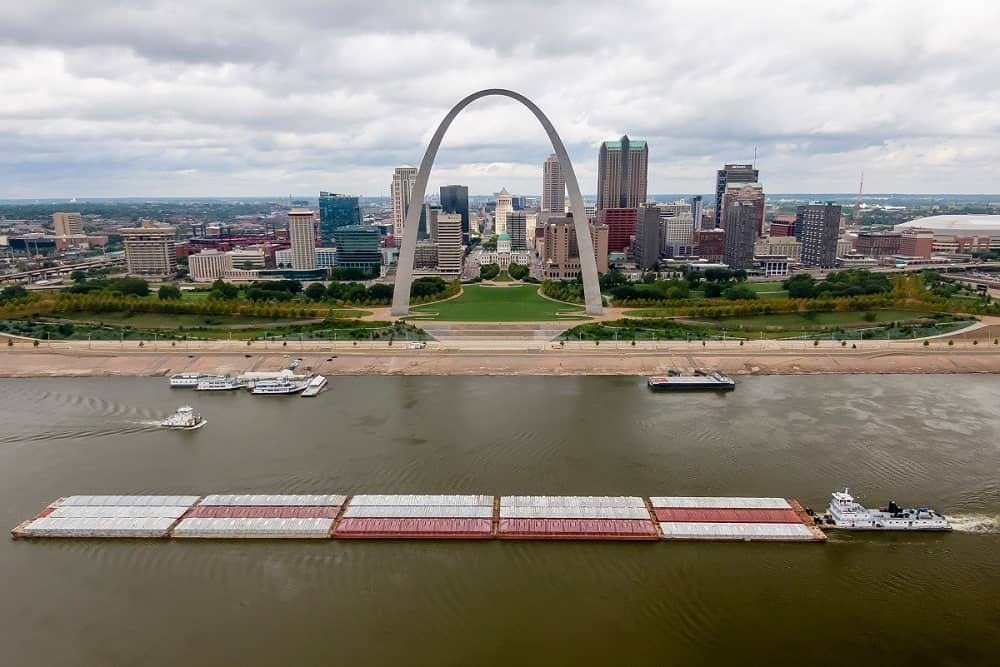
The low Mississippi River level affects grain freight barges, down 79% in one month.
Thanks to scientific inquiry and cutting-edge investigative tools, we now see our planet’s realities with unprecedented clarity. As Earth shoulders the needs of 3.8 billion people, understanding our climate—its shifting patterns, the speed of its changes, and how we might adapt or slow them—has never been more urgent (The Sustainable Development Goals Report 2022, n.d.). Yet, at this critical moment, the Trump administration is tearing down the very scientific programs we rely on to monitor, adapt, and safeguard both our food supply and the planet’s irreplaceable biodiversity.
Political tensions may grab the headlines, but a far more daunting crisis is quietly unfolding beneath our feet. The United States and Iran, though locked in open conflict, are both battling a far greater foe: the climate itself. Both nations are draining their ancient underground water reserves at a breakneck pace, fueling a crisis that knows no borders. These fossil-water aquifers—vast, hidden reservoirs built up over millennia—have enabled industrial agriculture and urban expansion in some of the world’s driest regions (GebreEgziabher et al., 2022). Yet, because these aquifers refill at a glacial pace compared to the speed of extraction, both countries are essentially mining a one-time, irreplaceable inheritance.
This crisis is playing out in both countries, echoing similar patterns yet shaped by each nation’s unique local realities.
In the United States, a hidden groundwater crisis is particularly severe across the American West and the Great Plains. The primary ancient source at risk is the Ogallala Aquifer, a mammoth fossil water system underlying eight states from South Dakota to Texas. This aquifer recharges at a rate of less than an inch per year (Scanlon, 2006). Since industrial pumping began around 1940, a volume equivalent to two-thirds of Lake Erie has been drained from the Ogallala (Konikow, 2015, pp. 63-78). Data from the New York Times shows that 40 percent of thousands of monitored U.S. wells hit historic lows over the past decade (New York Times, 2023).
At the heart of this crisis lies the relentless pursuit of agricultural dominance. Industrial-scale farming of thirsty crops such as corn, alfalfa, and soybeans in arid regions accounts for nearly 90 percent of groundwater extraction (Tracy et al., 2019). The fallout is dramatic. In parts of Kansas and Texas, “Day Zero” has already struck, leaving farmers with empty wells. The ground itself is sinking, roads are buckling, foundations are splitting, and the loss of underground mass has even nudged the Earth’s rotational axis (Galloway & Burbey, 2011).
Iran’s water crisis is so severe it threatens the nation’s very stability. For three millennia, ancient Persians mastered the art of sustainable water use, channeling groundwater through qanats—a vast, UNESCO-protected web of gravity-fed tunnels that gently skimmed the top of the water table. This delicate balance shattered when Iran embraced modern electric pumps and deep wells, drilling over a million in recent decades (Lin et al., 2024). Now, an international study in PNAS reveals that Iran harbors 32 of the world’s 50 most overpumped aquifers, with water tables in some regions plunging by up to ten feet each year.
In Iran, the crisis is fueled by a government-driven quest for agricultural self-sufficiency, a response to decades of harsh international sanctions. Generous subsidies for cheap fuel and water have led farmers to flood the desert in pursuit of water-hungry crops like wheat and rice. The results are devastating. Over 80 percent of Iran’s renewable water is consumed each year (Mesgaran & Azadi, 2018). Lakes are disappearing, ancient qanats are running dry, and enormous sinkholes are ripping through historic cities such as Isfahan. Vast regions now teeter on the brink of becoming unlivable (Aeschbach-Hertig & Gleeson, 2012).
The United States and Iran stand as stark warnings of what happens when societies depend on ancient underground water: irreversible depletion and ecological upheaval. Solving this crisis will demand bold shifts not just in water management, farming practices, and government policy, but also in specific approaches that turn analysis into real-world action. Concrete responses might include setting limits on groundwater extraction, restructuring water rights systems to prioritize sustainability, and implementing progressive water pricing that encourages conservation. Governments could create incentives for farmers to transition to less water-intensive crops or invest in efficient irrigation technologies through grants, low-interest loans, and technical assistance programs. Stricter regulations on new well drilling or mandatory metering, alongside public education about water scarcity, can also help communities adapt (Mieno et al., 2024). By aligning water policies with modern scientific understanding and economic realities, it is possible to conserve vital aquifers and secure a more resilient future.
Changing crop choices can slow groundwater depletion through aligning agricultural demand with a region’s natural water limits. When farmers replace water-guzzling crops with drought-tolerant varieties or alternative commodities, they directly reduce the volume of water pumped from declining aquifers [climate.gov, pnas.org]. [1, 2]
Here is how changing crops changes the water equation:
One of the most direct ways to conserve water is to replace thirsty, region-inappropriate crops with those that require much less irrigation. In the United States High Plains, switching from crops like corn or alfalfa, which require heavy, continuous watering, to grain sorghum or winter wheat can greatly reduce water use—sometimes by 30 to 50 percent—while still using existing farming equipment (Aiken, 2020). In Iran, farmers are moving away from growing flood-irrigated rice and wheat in arid zones and turning to drought-resilient crops such as saffron, pistachios, and pomegranates. These alternatives generate high-value yields using minimal drip irrigation.
Another important strategy is to transition to crops that can naturally withstand dry spells, thereby lessening the need for excessive irrigation and preventing crop failure. Certain plants, such as sunflowers and specific legumes, develop deep root systems that tap moisture unavailable to shallow-rooted crops, reducing dependence on topsoil irrigation. In addition, planting genetically optimized or traditionally bred varieties of cotton and corn specifically designed to thrive with less water can help stabilize yields during droughts without further depleting underground aquifers.
A further approach is to move away from traditional annual crops, which require fields to be tilled and heavily watered each year, to perennial crops that remain in the ground for multiple seasons. This switch saves water over the long term. For example, Kernza—a well-established perennial grain—has been adopted in some parts of the US Midwest. It stays rooted for years, helps prevent soil erosion, and uses significantly less water than annual crops like wheat or corn (Kernza: Innovating Sustainable Farming, n.d.). Similarly, replacing standard alfalfa with drought-tolerant forage grasses or clover can greatly reduce the water footprint of livestock feed production.
Some farmers in areas where water scarcity is most severe are turning to non-food crops that are inherently adapted to hyper-arid environments. For instance, guayule is a desert shrub cultivated in the US Southwest for its natural rubber and requires far less water than traditional crops like alfalfa or cotton. Jojoba, another hardy desert plant, is grown for its oil, which is widely used in cosmetics. This crop flourishes in both the US Southwest and Iran’s arid regions with minimal water input, providing a green option in extremely dry conditions.
Despite the clear benefits of changing crop choices, major economic and cultural barriers make this transition challenging. Infrastructure such as processing plants, grain elevators, and established supply chains are often built around specific crops like corn or wheat, so shifting to new crops requires constructing entirely new markets and logistics. Additionally, government policies in both the United States and Iran have traditionally rewarded farmers for growing water-intensive crops through systems like crop insurance and subsidies for water and fuel. Even when farmers switch to high-value orchard crops, such as pistachios or olives, profitability frequently lags because these trees take several years to mature before they begin generating income. [1, 2]
What is happening to the US river systems, and the Mississippi and Colorado rivers, in this drought
Major United States river systems are facing a severe water crisis driven by persistent droughts, record-low winter snowpacks, and accelerating climate change. Nearly 60% of the continental United States is experiencing moderate drought conditions, transforming seasonal weather variations into full-blown water shortages across both the East and West. [1, 2]
The impacts on the nation’s two most critical river systems show clear regional crises. The Colorado River Basin is nearing structural collapse. The Colorado River, which provides drinking water to 40 million people and irrigates vast areas of American farmland, is not simply experiencing a temporary drought—it is undergoing permanent aridification. A record-low winter snow drought in the Rocky Mountains has left the basin with less than 30 percent of its average water runoff. This situation is worsened by warmer, drier springs, during which local vegetation absorbs much of the remaining snowmelt before it reaches the river channels.
As a result, Lake Mead and Lake Powell—the nation’s two largest reservoirs—have fallen to roughly one-third of their capacity. Federal water managers warn that if water levels at Lake Powell fall below key thresholds, water releases could stop entirely, halting vital regional hydropower generation. Meanwhile, the Bureau of Reclamation has imposed mandatory water cutbacks on lower-basin states such as Arizona and Nevada, as well as on Mexico. Interstate negotiations over a future water-sharing framework have stalled, and federal intervention now appears inevitable, with the result likely being sharp reductions in agricultural water allocations.
While the Colorado River suffers from chronic dryness at its source, the Mississippi River is facing a different challenge in the form of volatile “flash” droughts that severely disrupt the nation’s heartland. Prolonged dry spells in the Ohio River Valley and Upper Midwest have significantly reduced the volume of water feeding into the Lower Mississippi. At the height of these droughts, the Ohio River’s contribution has dropped to just eight percent of the Mississippi’s total volume, compared to a typical fifty percent. Falling water levels have forced barge companies to lighten their loads to pass through shallower waters, bringing about widespread logistical delays and raising the cost of transporting key crops like corn and soybeans. In addition, when the freshwater volume in the Lower Mississippi declines significantly, saltwater from the Gulf of Mexico advances upstream into Louisiana, threatening the drinking water infrastructure of several riverfront communities.
Will there be enough fresh water for people, crops, and data centers?
A single large “hyperscale” data center consumes between 1 million and 5 million gallons of fresh water daily. This is equivalent to the daily residential water use of a city of 10,000 to 50,000 residents. Consequently, a data center can use anywhere from 10% to 50% of the water a city of 100,000 people would use in a day (Sullivan, 2026). As the demand for cloud computing and digital infrastructure grows, leading technology companies are increasingly adopting sustainable practices to lower water use. These include advanced air-cooling systems, closed-loop water recycling, and alternative cooling methods, such as treated wastewater or innovative liquid-cooling designs. By investing in these technologies, data centers can greatly reduce their freshwater footprint and set new standards for resource efficiency in the tech industry. [1, 2, 3]
The administration’s approach to climate monitoring and science features the following key actions:
Under the Trump administration, federal climate monitoring infrastructure has been systematically dismantled, and critical scientific research on climate change has come to a halt. Hundreds of deep-sea climate sensors have been removed, and there have been efforts to cancel major satellite instruments, terminate the U.S. Greenhouse Gas Reporting Program, and erase public climate datasets (Kovac, 2026).
The National Science Foundation (NSF) began removing more than 900 active instruments from the Ocean Observatories Initiative, a network that tracked ocean heat waves, marine ecosystems, and Atlantic circulation systems. Meanwhile, the administration has taken steps to cut key climate-measuring instruments from NOAA’s next-generation GeoXO satellite series.
The Global Monitoring Laboratory of the National Oceanic and Atmospheric Administration (NOAA) faces elimination under proposed budgets. The Environmental Protection Agency (EPA) has moved to end the Greenhouse Gas Reporting Program, and NOAA has been directed to shut down public resources, including its climate.gov portal and the Billion Dollar Weather and Climate Disaster dataset. The administration has also cut over a billion dollars in funding from scientific agencies such as the NSF and NOAA, significantly downsizing climate research arms and eliminating the U.S. Global Change Research Program’s coordination office. Finally, the United States has withdrawn from the Intergovernmental Panel on Climate Change (IPCC) and ordered federal scientists to cease all work related to IPCC climate evaluations.
In the face of mounting climate change, anxiety about the future of the planet’s fresh water has never been more justified. As the United States retreats from global climate science leadership and critical monitoring programs are dismantled, our ability to address the escalating water crisis is profoundly diminished. The depletion of irreplaceable aquifers in both the U.S. and Iran, the collapse of river systems, and the rising demands of agriculture and industry present a stark warning: safeguarding freshwater is not a distant challenge but an immediate imperative. Long-term planetary health will hinge on our willingness to act decisively—adopting science-based water management, reforming agricultural practices, and restoring the role of rigorous, transparent climate science. Only through collective resolve and innovation can we hope to conserve the world’s remaining fresh water, securing a livable future for generations to come.
References
New York Times. (2023). America’s groundwater crisis: Why the water’s running out. https://www.nytimes.com/interactive/2023/08/28/climate/groundwater-drying-climate-change.html
(n.d.). The Sustainable Development Goals Report 2022. https://worldjpn.net/documents/texts/SDGs/20200707.O1E.html
GebreEgziabher, M., Jasechko, S. & Perrone, D. (2022). Widespread and increased drilling of wells into fossil aquifers in the USA. Nature Communications 13. https://doi.org/10.1038/s41467-022-29678-7
Scanlon, B. (2006). Global Synthesis of Groundwater Recharge in Semiarid and Arid Regions. Journal of Hydrology 329(12). https://doi.org/10.1016/j.jhydrol.2006.02.004
Konikow, L. F. (2015). Long-term groundwater depletion in the United States. Groundwater 53(1), pp. 63-78. https://doi.org/10.1111/gwat.12306
Tracy, J., Johnson, J., Konikow, L. F., Miller, G., Porter, D., Sheng, Z. & Sibray, S. (2019). Aquifer depletion and potential impacts on long-term irrigated agricultural productivity. U.S. Geological Survey (63). https://doi.org/10.3133/70237799
Galloway, D. L. & Burbey, T. J. (2011). Review: Regional land subsidence accompanying groundwater extraction. Hydrogeology Journal. https://doi.org/10.1007/s10040-011-0775-5
Lin, C., Miller, A., Waqar, M. & Marston, L. T. (2024). A database of groundwater wells in the United States. Sci Data 11(1). https://doi.org/10.1038/s41597-024-03186-3
Mesgaran, M. & Azadi, P. (2018). A National Adaptation Plan for Water Scarcity in Iran. Iranian Studies. https://iranian-studies.stanford.edu/publications/national-adaptation-plan-water-scarcity-iran
Aeschbach-Hertig, W. & Gleeson, T. (2012). Regional strategies for the accelerating global problem of groundwater depletion. Nature Geoscience 5. https://doi.org/10.1038/ngeo1617
Mieno, T., Foster, T., Kakimoto, S. & Brozović, N. (2024). Aquifer depletion exacerbates agricultural drought losses in the US High Plains. Nature Water 2. https://doi.org/10.1038/s44221-023-00173-7
Aiken, R. M. (2020). Water Use and Productivity of Corn and Grain Sorghum in Long-Term Crop Sequences. Kansas Agricultural Experiment Station Research Reports 6(5). https://doi.org/10.4148/2378-5977.7929
(n.d.). Kernza: Innovating Sustainable Farming. The Land Institute. https://landinstitute.org/our-work/perennial-crops/kernza/
Sullivan, K. (June 3, 2026). Risks Associated With Data Center Water Consumption. Verisk. https://core.verisk.com/Insights/Emerging-Issues/Articles/2026/June/Week-1/Risks-Associated-With-Data-Center-Water-Consumption
Kovac, A. (June 2, 2026). Trump administration to remove hundreds of deep-ocean observation instruments, dismantling $368 million program. Eos. https://eos.org/research-and-developments/trump-administration-to-remove-hundreds-of-deep-ocean-observation-instruments-dismantling-368-million-program
.
One of the most dangerous water shortages is building up in Mexico City, which has an over-use situation similar to the American West. This will be continent-wide and not pretty!
Bravo Ms, Maloney. You have taken on one of the most frightening and important topics. The availability of life-giving water. Excellent work as usual.
Switching to more drought tolerant crops is essential. Thank you for distinguishing between drought [which is temporary] and aridification [which is permanent]. A huge area of this country has been arid for a period of 1200 years. Tree ring analysis reveals this trend. It has been in only the last two centuries during which that area has been unusually wet. Coincidentally we are warming the planet during the same time that area is trending back to its original arid condition. The native people who existed for 10,000 years in the San Diego/Los Angeles corridor adapted their way of life to arid conditions. We must do the same.
The climate deniers like to say that the area is warming not because of our creation of the greenhouse effect. But, they claim, it is moving through a natural cycle. They are only half correct. Both are happening at the same time: cyclical warming and greenhouse-effect warming.
Something I never see talked about publicly are the possible effects of the Gulf Stream being disrupted from the overall warming of the planet. The warm water of the gulf stream originates in the Caribbean. If something prevents this warm water from reaching the British Isles those people are doomed. Look at the latitude of the British isles on a globe. At best, Britain would become another Iceland. Is it possible the Gulf Stream could be diverted from Britain as a result of Global warming? Yes, absolutely. Could something similar happen elsewhere on the globe? I think so.