
Bridging Divides Through Universal Healthcare

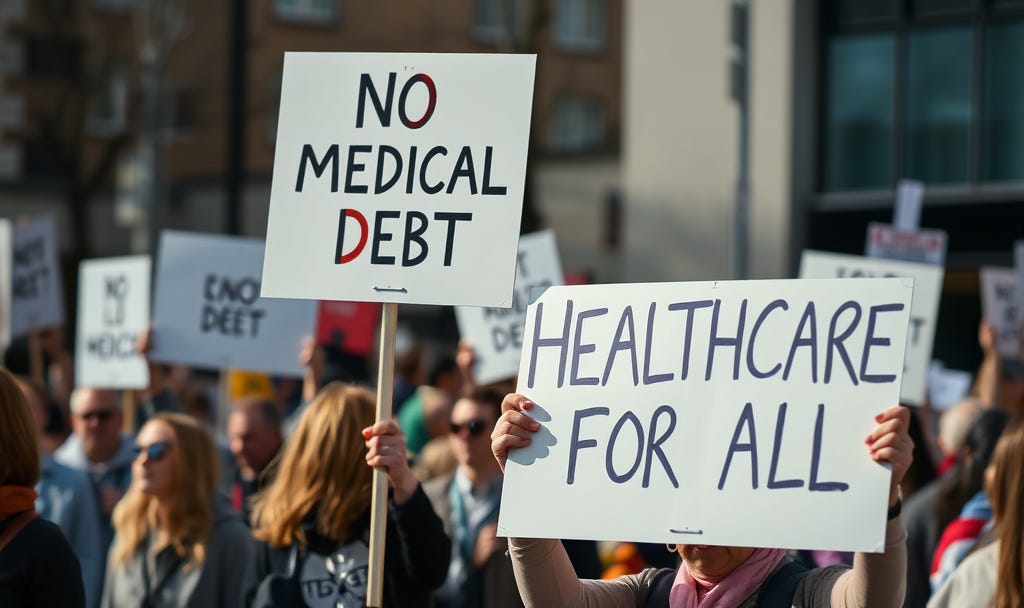
In the 21st century, Western democracies have become landscapes marked by political disconnect and deepening division. Once, income and education marched together as reliable predictors of political allegiance, but that partnership has unraveled, as recent studies reveal (Zingher, 2026). The Pew Research Center reported in 2023 that 68% of American college graduates identified with or leaned toward progressive parties, while only 36% of those without a degree did so, regardless of income. Today, the highly educated, no matter their earnings, are drawn to progressive parties, while those with less education—even if they earn more—often find a home in right-leaning or populist movements, a pattern echoed in the 2021 European Social Survey (Guth & Nelsen, 2021). These splits, sharpened by where people live and who they are, stoke polarization and make it harder than ever to find common ground on vital issues like healthcare, as the World Inequality Report 2026 makes clear (Chancel et al., 2026).
This divide is more than a shift in values; it shapes real lives and outcomes. The split between education and income serves as both a smokescreen and a wedge, diverting attention from the deeper machinery that keeps inequality running (Busemeyer, 2012, pp. 219-240). The wealthy, shielded by inherited privilege, assets, and exclusive circles, hold on to power not just through merit or education but through systems designed to keep them on top (Chyn et al., 2026). By spotlighting education as the golden ticket, public debate often overlooks the true engines of wealth: inheritance, monopoly, and political clout (Comerford et al., 2022). This fractured politics lets the wealthy steer policy to protect and even grow their advantages, while most people remain split and, too often, discouraged (Persson & Sundell, 2023, pp. 514-525). Tackling these structural inequalities calls for bold policy moves. Progressive inheritance and wealth taxes, closing loopholes that let monopolies thrive, and stronger campaign finance rules could all chip away at concentrated power. Expanding access to asset-building—through first-time homebuyer programs, affordable college loans, and small business support—could help turn the promise of mobility into reality.
Yet, even in this landscape of division, some issues have the power to unite people across income and education lines. In the United States, healthcare is a shared concern. Everyone, no matter their story, needs dependable access to medical care. But the current system is fractured, costly, and often leaves people feeling helpless—a frustration felt by both top professionals and low-wage workers alike. Polls reveal that most Americans, regardless of party, believe the government should guarantee health coverage for all (Daniller, 2025). The real challenge is not the goal, but finding a path everyone can walk together.
Universal healthcare promises more than a cure for the nation’s medical troubles; it offers a bridge over the political divides that block progress. A single-payer, universal system could lay the groundwork for a new coalition, one that rises above the education-income divide, weakens elites’ power to keep voters apart, and delivers real gains for everyone. Other democracies have faced these hurdles and prevailed. Countries like Canada and Australia overcame early doubts about universal healthcare by building support step by step and focusing on fairness (Philippon et al., 2018, pp. 453-472). Their stories show that, with the right strategy, it is possible to unite diverse groups and overcome resistance from powerful interests. To make this vision real in the United States, advocates must tackle big obstacles: ideological pushback, fear of the unknown, and the entrenched power of private insurers and the wealthy.
How can Americans be inspired to support a single-payer universal healthcare system? Success depends on strategic communication, incremental implementation, and a clear emphasis on tangible, everyday benefits—approaches underscored throughout this analysis. Rather than relying on polarizing terms like “single-payer” or “socialized medicine,” advocates might reframe the proposal as “US Health Security” or “Universal Choice Care,” evoking a sense of shared purpose and the assurance of liberation from medical debt.
To build unity, reformers might take a step-by-step approach: first, open Medicare enrollment to all ages, inviting broad participation and gathering valuable data on costs and access; next, expand Medicaid and CHIP so more families can get care right away; then, launch state-level universal coverage pilots to test ideas and build momentum across the country. At every stage, progress can be tracked with clear goals—like more people enrolled, fewer uninsured, and higher patient satisfaction—to earn public trust. These measured steps can prove the concept works, without sudden or jarring changes.
Campaigns should spotlight the everyday wins people want: no more surprise medical bills, lower out-of-pocket costs, and the freedom to pick any doctor or hospital. Trusted voices—nurses, veterans, seniors, doctors, and small business owners—can share firsthand how a universal system changes lives for the better. To make the transition seamless, enrollment should be easy and welcoming, with automatic coverage for those losing employer insurance and no unnecessary paperwork.
Above all, storytelling should take center stage. Sharing real stories—children whose lives were saved, families rescued from bankruptcy, entrepreneurs freed to chase their dreams—creates powerful emotional bonds and trust. By presenting universal healthcare as a distinctly United States solution that draws on national strengths and ensures no one is left out, advocates can rise above partisan fights and unite a wide coalition.
Of course, opponents of universal healthcare often argue that such a system would increase government costs, reduce medical innovation, or limit individual choice. Some claim that wait times would grow longer, or that quality might decline. Advocates can respond by pointing to the experience of other countries that have implemented universal systems while maintaining high standards of care and medical advancement. By emphasizing that a well-designed system can preserve provider choice, expand access, and use resources more efficiently, supporters address concerns without ignoring the challenges raised by critics.
As more individuals see the tangible advantages for themselves, opposition will gradually dissipate, and enthusiasm will flourish—establishing the foundation for a more equitable and cohesive society, one where entrenched wealth has less power to exploit societal divisions.
References
Zingher, J. N. (2026). Educational Polarization in American Politics: More than Just a Diploma Divide. Political Research Quarterly 79(2). https://doi.org/10.1177/1532673X261443524
Guth, J. L. & Nelsen, B. F. (2021). Party choice in Europe: Social cleavages and the rise of populist parties. European Journal of Political Research 27(3). https://doi.org/10.1177/1354068819853965
Chancel, L., Gómez-Carrera, R., Moshrif, R. & Piketty, T. (2026). Political Cleavages - World Inequality Report 2026. World Inequality Report 2026. https://wir2026.wid.world/insight/political-cleavages/
Busemeyer, M. R. (2012). Inequality and the political economy of education: An analysis of individual preferences in OECD countries. Journal of European Social Policy 22(3), pp. 219-240.
https://doi.org/10.1177/0958928712440200
Chyn, E., Cohen, K., Haggag, K. & Stuart, B. A. (2026). The Persistence of Power: How Family Origins Shape Political Representation and Policy. NBER Working Paper No. 35180. https://doi.org/10.3386/w35180
Comerford, D., Mora, J. V. & Watts, M. J. (2022). Meritocracy and the inheritance of advantage. Journal of Economic Growth 27. https://doi.org/10.1007/s10887-021-09201-1
Persson, M. & Sundell, A. (2023). The Rich Have a Slight Edge: Evidence from Comparative Data on Income-Based Inequality in Policy Congruence. British Journal of Political Science 54(2), pp. 514-525. https://doi.org/10.1017/S0007123423000066
Daniller, A. (December 9, 2025). Is ensuring health care coverage a government responsibility? What Americans think. Pew Research Center. https://www.pewresearch.org/fact-tank/2020/09/29/increasing-share-of-americans-favor-a-single-government-program-to-provide-health-care-coverage/
Philippon, D. J., Marchildon, G. P., Ludlow, K., Boyling, C. & Braithwaite, J. (2018). The comparative performance of the Canadian and Australian health systems. International Journal of Health Services 48(3), pp. 453-472. https://doi.org/10.1177/0840470418788378
I think you have unveiled the right elements: education so that everyone can see how they are being misled, and a common passion - healthcare - to promote unity. Our own universal healthcare is not perfect - free dental care is only available to seniors and lower-income people - but its results are unifying for our society.
Americans right now are being misled here in California, for example in response to the issue--Tom Steyer is NOT on right side of the issue despite his real working family background in New York. I'm 68 and a native to the state. Despite his progressive beliefs he won't change, and he is high profile. The level of his wealth at this point is unexcusable to not back single payer and healthcare for all citizens.